1. (new!) To Nourish – With Food: How To Feed A Gluten Free Family

Finding ways to eat gluten free is hard enough for one person.

There are so many things you can no longer eat, from bread and tortillas to salad dressings and spreads.  Eating out is even more tricky, since you have to know what to eliminate, as well as buzzwords to look for (gravy, fried, sauce, or wrapped in are all words that will key you in to if it has gluten in/on it!).  Even if you order from the gluten free menu, you aren’t guaranteed that it will arrive gluten free.  There have been a number of times that my gluten free dish has been served with gravy (which has flour in it), or even with a side of garlic bread.

Garlic bread…seriously.  I talked with 3 waiters about this, and they all insisted that the salad I ordered was gluten free, and the garlic bread was “just a garnish.”

“Here is your lovely gluten free salad with a side of death.  Enjoy!!” (for the record, the manager saw all of this and didn’t charge us for the salad, which was very nice of her)

What happens when you try eating gluten free for the whole family??

From eating out to grocery shopping to cooking it yourself, this can be a difficult journey to grasp…but I promise it is easier than it seems!  But it also takes a good amount of diligence, so let’s break this down:

1. Bye-Bye BBB: Assume that anything that is Boxed, Bottled or Bagged has gluten in it.  It might not, but unless you check, assume the worst.  I discovered the gluten in Potato Buds when I was in college, and Rice a Roni has pasta in it (I really didn’t know this. I just knew that I didn’t know how to cook rice when I was 20. Anyone else raised on Uncle Ben’s?  Anyone?)  The key is to check every single ingredient list.  Twizzlers? Wheat.  Soy Sauce?  Wheat.  Salad dressings? If you can decipher the chemically-long ingredients they have in there, there is probably gluten in there somewhere.  Check every bag of chips, every box of cereal and every bottle of whatever.

2. Learn to Cook From Scratch: I know this is kind of extreme, but it will save you so much time in the end.  Learn how to cook rice.  Learn how to cook the foods you love without using pre-packaged ingredients.  Use as many whole foods as you can without drinking the “whole food” kool-aid.  I just think life is complicated enough without adding in volumes of encyclopedias of philosophies, so keep it simple.  Just cook.

3. Learn How To Order Out: This will also save you a world of hurt…literally.  Make no exceptions.  You cannot scrape gravy off, you cannot pick all the bread crumbs off.  Be diligent with what you order and how you order it.  Bunless hamburgers are great, salads are generally always safe, and whole food dishes are pretty easy to order.  But say goodbye to pasta, lasagna, fried chicken, doughnuts, and pizza.  Also, look for funny wording: My husband let me know about Mountain Mike’s pizza offering “gluten free crust,” which is a very specific order.  That is not a gluten free pizza, that is just a gluten free crust…so we went in to check it out, and it was the most worthless gluten free offer I have ever seen.

Please be aware that our gluten-free crust is prepared in a non-gluten free environment. During normal kitchen operations involving shared cooking and preparation areas there is a possibility that our gluten-free crust will come into contact with wheat flour and/ or other non-gluten free items. We cannot guarantee that any menu item is completely gluten-free. Customers with gluten sensitivities should therefore exercise judgment in consuming such items.” (link)

Just consider that pointless.

4. For Heaven’s Sake, Stop Contaminating Yourself: I’m speaking from experience on this one, and I will say that contamination is the worst.  Because you don’t expect it.  You cannot use the same pan for gluten free pancakes that you just used for regular pancakes.  You cannot stir a gluten free pot with a spoon you just used for something else.  Every bread crumb, every pot, every cupcake tin will be contaminated.  This week I have been contaminated by using the toaster, because I’m stupid.  I know it’s contaminated, but I was in a rush: I also spent over two hours with symptoms, and it wasn’t worth it.  So, you gotta be diligent with gluten free environments.

5. Peer pressure is tough.  Learn to toughen up and say no: I haven’t met one unsympathetic person when it comes to gluten intolerance.  Just about everyone thinks it’s awful, and although I can’t say it’s the worst thing in the world…I mean, it’s not freaking cancer…it’s a challenge to get the hang of it.  But there will be very good friends or family who want to make you gluten free dishes, and it is normally safer to not eat them unless you know  that they know how to do it right.  No white bread, no spelt bread, no crumbs, no cross-contamination, no flour, no dusting, no breadcrumbs, and seriously no cream of whatever soup.  Peer pressure is probably the hardest because generally, you want to make people happy.  Generally.  Even when you’re eating out, you need to be very firm and not allow gluten on your plate.   Some of us have trouble when comments like, “it’s just a little flour,” or “it’s just white bread” are used, because that little bit is horrible.   Absolutely horrible.  And you will be in pain for hours, if not days.  Learn how to stand your ground and not eat food you are even a little iffy about.  It’s tough, and you have to learn how to do it without hurting people’s feelings, but you gotta do it.


Conclusion: Eating gluten free can be a tricky journey, but it can also open the culinary doors to things you’ve never tried before!  Like seafood, or vegetables you’ve never tried.  Heck, you might even figure out how to pronounce quinoa right.

Like coconut macaroons from Bouchon.BouchonBakery-logo2
 

Bouchon Plug!

10 Ways To Rediscover The Kindness of Common Courtesy

Just as any other city, there are a few homeless people who are regulars in my town. 

I have a budget for charity each month, and sometimes I buy them coffee if it’s cold out, or swing by McDonald’s for a warm meal if it’s late (it’s only $8 for a burger, fries and a large coffee…it’s not that much).  But I tend to always reach into the pocket of my backpack with the little cards that say “God loves you,” (because He does) with a dollar bill paperclipped onto it.  I figure it can get pretty lonely sitting on a corner asking for help.  Although I can’t do much for them all, maybe they need to hear that someone loves them once in a while.  Sometimes that alone is worth more than all the nickels and dimes they get.
But more importantly than any of this, I stop my car, look them in the eye and say to them, “Have a nice day.”  Sometimes I ask if there is anything else they need, like blankets or a jacket in the winter, but they have never taken me up on that (yet).

What kills me, if I’m going to be honest, is that every one of them replies with, “Thank you and God bless you.”

Every time.

I always drive away thinking how backwards this is, because they should be the ones simply replying, “Have a nice day,” and I should tell them, “Thank you for your humility, and God bless you in your endeavors.”

I have a home, a loving husband who provides for our large family, a meal to look forward to every day, and a stable future I can depend on.  The least I can do is extend common courtesy to the people around me.

Look them in the eye, smile and say thank you.

The other day I was at the store picking up a few things for dinner.  Spaghetti, tomatoes, french bread…just easy stuff for the night.

The cashier’s name was Amy P. and I looked her in the eye and smiled when she handed me the receipt and I said, “Thank you Amy.”

The woman bagging my spaghetti was Shannon, and I looked her in the eye, smiled and said, “Thank you Shannon, have a good day.”

These are common courtesy behaviors we are drilling into our kids.  Amy P. did not have to find my name on the receipt and say, “Have a good day Mrs. Rockwood,” and Shannon did not have to pack my bags in a way that made them easy to carry.  Yes, they were at work…but this is not some cold, dictatorship country where workers are forced to do things under penalty of death.  People still have the ability to choose their actions and behaviors, and we all know that there are some people who do not take their jobs with a cheerful heart, and they make the experience painful for everyone involved.(insert many colorful anecdotes here)

It is crucial, I think, to extend the same kindness to those who make the effort to extend kindness to you; or even more importantly, to those who don’t know how to do this at all.

Now, this is all small beans compared with giving clean water to underdeveloped countries, or feeding starving children.  But if we can’t be kinder and civilized in our own lives, how can we expect to be of any help to anyone else?

The only way we can change the world…for the better…is to start with ourselves.  Here are some ways to rediscover the kindness of common courtesy in our lives, so we don’t irritate people to the point of insanity!

1. Look them in the eye, smile and say thank you. Do this with your coworkers, your family, nurses, waiters, cashiers…heck, do it with yourself once in a while.

2. Use people’s names.  Real life isn’t the internet, and the people you see aren’t anonymous.  If you know their name or if they have a name badge, say their names.  “Thank you Tamarah” is a lot more personal and kind than “Thank you.”

3. Get off your phone if you are with someone.  I don’t think we need to be ridiculous about phones, but some common courtesy needs to be implemented.  I think talking on the phone in public is not a big deal, but if you are visiting someone’s house and you can’t stop texting someone else, I figure it’s fair game to drag you outside by your ear and kick you in the butt for being so rude.  If someone is giving you their time, do not disrespect them by ignoring them in their house. (obviously it is acceptable to “step outside for a moment” to take an important call, just don’t make a habit of it)

4. Instead of talking about you, ask them about them.  I figure we spend enough time with ourselves as it is, it is probably healthy for a person to find out more about someone else for a change.  It also encourages relationships to be formed, common interests to be found, and you can hear about how they feel or what they think.  This isn’t a “never talk about yourself, ever” tip, but a general courtesy to extend to others.

5. Think about how what you say may impact the people around you. For example, I was part of a mother’s group for a while and we had a birthday coming up so I invited the few other people in the group to the party.  Pretty straightforward stuff.  It’s completely understandable when people can’t make it: everyone has busy schedules, especially with kids.  It is completely a slap in the face when the person explains that her husband didn’t want to come to our house because he didn’t like us, and go on to spend the next 40 minutes talking about the amazing party they went to over the weekend and  name dropping the elders of the church who were there with them the entire time.  It was impressive how offensive this woman was, and how alienated people in that church felt because this kind of behavior was so accepted.  Learn from examples around you, especially if they are dumb examples.

6. Be on time.  This is incredibly difficult for us because we have 14 feet in this house that need shoes, and sometimes it is not as obvious where, exactly, each of these shoes are when it is time to leave.  But if you are expected to be somewhere at a given time and show up late, you are telling the other person/group that their time is not nearly as important as your time.  And there is nothing that irritates me more than having my time wasted, especially by people who are hours (yes, hours) late.  What’s the point?

7. Leave on time. This is a smaller infraction, but it is also just as important to give your hosts a break.  You don’t want to leave to early and have the hosts wonder if they said something wrong, but you also don’t want to stay forever so the hosts try to figure out how to nicely ask you to leave.

8. Dinner Manners Matter, Especially at Home. Dinner time isn’t a highly formal affair at our house, but it isn’t laissez faire either.  Pray together as a family, sit at the table together, talk to each other about their days, enjoy the meal together.  We have a routine where we go through everyone and ask what was the best thing of their day, what was the worst thing, and then what was their (make up topic) thing…like, what was their wettest thing, what was their smelliest thing, was was their bluest thing.  Just to keep it fun 🙂  But people are not allowed to wear costumes to the table, even though that’s a bummer sometimes.  You ask for something by saying, “May I please…” and you say “thank you” if you are given something.  You absolutely thank the person who cooked the meal.  These are all very small ways to make sure everyone has a voice in the family, everyone is respected and it extends loving relationships between people.  And for the love of all that’s good, no TV.  Music, yes.  TV, no.

9. Do not talk about your money matters with people.  Unless it is very close family or extremely close friends, this will only end in strife.  Don’t talk about how much debt you have unless you want to be judged for your debt.  Don’t talk about the endless surplus in your bank account unless you want the other person to feel belittled by your wealth.  This is a very sensitive subject for people, and it is best to use the highest courtesy with the matters of discussing money.

10. Everyone has joys in their lives to some degree, and everyone has struggles.  Be a pal and don’t disregard someone else’s situations in favor of your own.  This is an issue of comparison.  Be happy for them when they are happy, and be empathetic when they are suffering; but never, and I mean really never, reply with, “that is nothing compared to what we went through…”  In the end, people share their happiness and their pain in order to create bonds with each other.  Couples who have children will share the incredible highs and lows of parenting together.  Women who have suffered miscarriages will have a bond of pain together.  People who have suffered from illnesses will understand the struggles of regaining health again.  People in the same industry relate with each other, etc.

Laugh when your friends laugh, cry when they cry, and be stronger for them both in the end.

Here are some books for further reading:

You’d Better Be Running.

When I think of things I can do during the day to make me happy, working out is never on the list.

I love hearing about the stories of some “high” people get when they go running.  There is some mysterious event that occurs in the bodies of some who need to conquer the road with their own feet.  Some accelerant pumping through their veins with the element of surprise that excites the mind of the runner, forcing them to keep going.  To break through the wall and push past the pain, to keep the beat of their pace to match the drive they feel bursting in their hearts.
 
To me, however, these experiences of endorphin rushes and running miles upon miles without death keeping pace next to you, are just like the tall tales of Paul Bunyan and his mighty blue ox, Babe, carving out the landscapes with his ax.  Someone may have seen him do this, years ago, and the stories may have some credence.  Maybe some gigantic man with an ax walked across the plains of America, putting his mark on the earth. But I have never seen any of his footprints, or even the reflection of blue from Babe shining upon the flowing streams across the lands….
 
It seems as if these mysterious people who run for pleasure reach some point in themselves where time stands still and their body is okay with pushing the limits.  Some ephemeral space that makes them put on their running shoes and demand more.
 
 
This has never happened for me.  I have made an effort to run, with my special inflated running shoes and my purple compression pants, and even my motto blazed across my running shirt that says, “Running Sucks.”

I’m the next cover of Vogue, I just know it.


I run for my health; but admittedly, I run a little.  I certainly don’t wake up in the morning and plan on running.  I plan on coffee and the agenda for the day…and maybe, just maybe, I can squeeze in one mile on the treadmill during the afternoon when the older kids are finishing up their schoolwork and the younger kids are sleeping.  But this is a scheduled event that sometimes, more often than I like to admit, gets pushed off in favor of other things I believe to be more important (laundry, cooking dinner, helping with schoolwork, tending the house, working on projects, etc.).

Yet, I am always thinking about running.  It isn’t on my mind that I “have to,” but honestly something that I sincerely “want to.”  I want that endorphin rush, and I want to feel like I have conquered the road.  I would love to run for miles and feel amazing, instead of getting to 0.6 miles and having to talk myself into making it to 1.0 without stopping.

I want to run without feeling the bulk of my body crashing on my legs, or the muscles that used to be in my abdomen actually hurt, convincing me that they even exist anymore after 5 gigantic pregnancies.  I want my physical strength to be on par with my intellectual strength.
 
“Every morning in Africa, a gazelle wakes up, it knows it must outrun the fastest lion or it will be killed. Every morning in Africa, a lion wakes up. It knows it must run faster than the slowest gazelle, or it will starve. It doesn’t matter whether you’re the lion or a gazelle-when the sun comes up, you’d better be running.” 

― Christopher McDougallBorn to Run: A Hidden Tribe, Superathletes, and the Greatest Race the World Has Never Seen


My goal is to be the lion.  To wake up in the morning and chase the day until it gives up and becomes mine.  And the only way I can get there is to be stronger, faster, more driven than the fleeing gazelle.  

I may not have the endorphins of the runner.  I may never get that rush of running a marathon.  But the force of the lion is within me, pushing me to strength.


This is my drive.


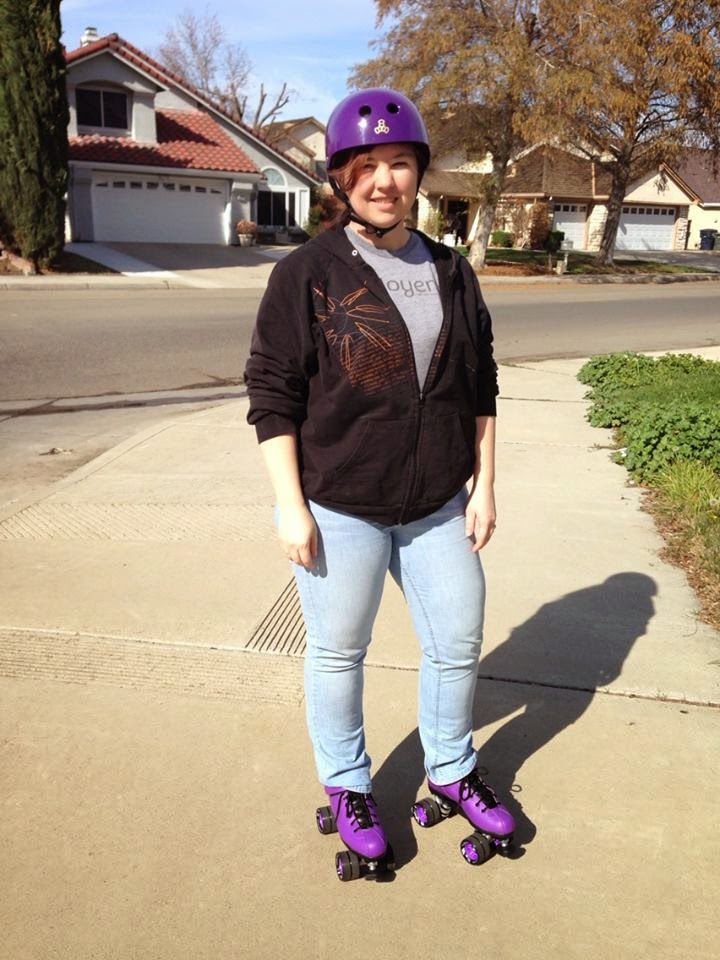
I might get there on roller skates, though.


It’s Princess Day: A Model For Your Kids

This year on St. Patrick’s Day I was taking a shower (in the afternoon, because that’s how I roll) and trying to think of something green to wear.

My kids were all downstairs trying to figure out the loopholes of the green code: do shoes count?  What about socks?  Green hair can’t count…but what about green eyes?  They were busy plotting and planning who they could pinch within the bounds of the law.


I, however, am not a green-person.  Green doesn’t look flattering on me at all, so I really couldn’t think of anything green that I even owned.  I was in a pickle, you could say.

 
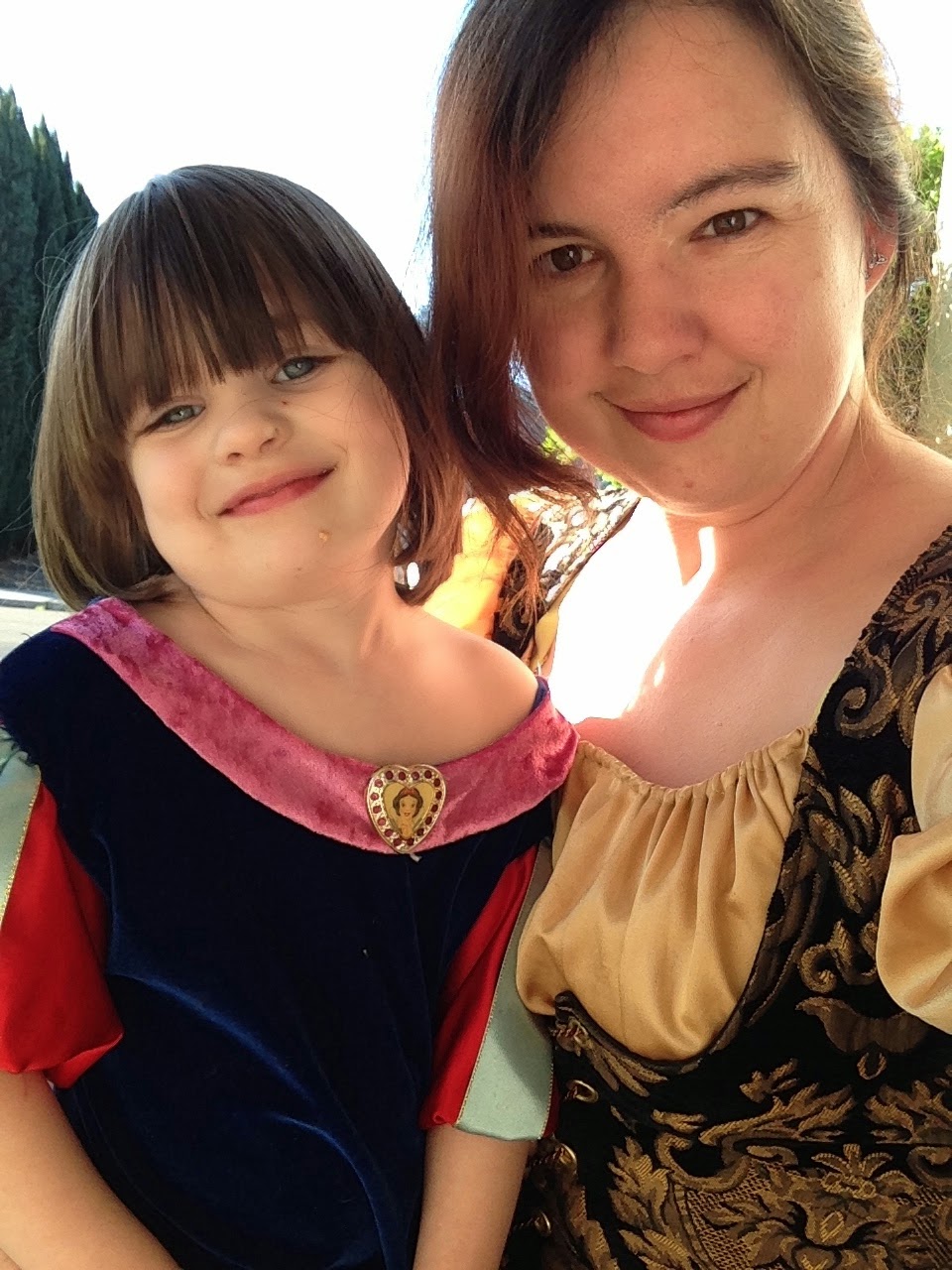
However, I do have this incredible gold satin Celtic chemise with a black and gold embroidered, lace-up over dress I got at a Scottish festival.  It is undoubtedly the most epic dress I own, and I figured if I couldn’t go green, at least I could go Celtic.

This is me not squinting.


So I hopped out of the shower and dug out my epic dress from the farthest reaches of my closet, behind the rest of the old dresses I don’t wear anymore.  I put on the golden layers, adjusted the silk chemise and laced myself up as tight as I could go.
 
My kids met me at the stairs wearing their martial arts’ uniforms, all ready for class, and I said, “Get your pads, it’s time for class!”
 
The funny thing is, they hardly batted an eye at what I was wearing.  It didn’t faze them in the least bit that I was wearing my Scottish garb to their martial arts class for the next hour and a half.  They just grabbed their bag of pads and got in the car, normal as always.
 
The only reaction I really got was from my 3 year old, actually.  She had just woken up from a nap and was coming down the stairs in her pajamas, and gasped in surprise when she saw me. All I heard when she turned around to go back into her room was her muttering, “It’s Princess Day, I have to get my Princess Dress…..
 
Those words were fantastic to hear.  It’s Princess Day.  I have to get my Princess Dress.
 
As a mother, and in particular as a homeschooling mother, it is crucial that I am a model for my kids.  They will be looking to my husband and me as models for what it means to be a woman, what it means to be a man, how a marriage works, what parents are like.  Since they are around me during the day, and every day for that matter, they will imitate how I behave, act and react to life.  
 
Ben took our oldest son out for hamburgers and pie for a “guys’ night out” the other night.  The funniest thing he reported back was after dinner our son  said to him, “Let’s take a walk to PetCo and look at the animals.  Mom would want us to get some good exercise.”  So they went over to PetCo and I got to hear about all the little critters they saw; which was super cute to listen to.
 
The truth is, you can overthink this aspect of being a model very quickly: “I am a model for my children, so no silly stuff.”
 
But that is the thing…the silly stuff is what makes the sun brighter, the flowers more colorful, the air that much sweeter.  The silly stuff makes the bubbles in summer fly farther, or the finger paint more vibrant.  It is the element that makes swimming in a lake together more memorable.  Or watching your favorite movie together and quoting all the words together, thus basically talking over the entire film.  The silly stuff adds that element of intense joy to life that you can’t buy, and you can’t fake.  It is genuine, it is personal, and it is loving.
 
Friends of mine have used words like “artsy” or “unique” to describe me before, which is totally valid.  They’ve used other words too, like “quirky,” or “creative.”  Truth be told, I have no problem wearing my favorite knee-high rainbow socks to church.  They’re my favorite socks!  I also have no hesitation painting my living room purple, or my kitchen lavender.  Although I live a pretty straight-forward, middle-class American suburban life…if I never did these little silly things that I love, I just wouldn’t be myself.  Anyone who knows me even a little bit would understand.  But more importantly, my kids know me and they understand.
 
I think it is important to the development of my kids’ characters to foster the love of learning, as well as the love of thinking outside the box.  Sure, you are supposed to wear green on St. Patrick’s Day…but what if you didn’t?  What else could you do?
 
And that is the question I pose for myself: If I am the role model for my kids, what else can I do?
 
It’s Princess Day, my friends.


The Blessing Beyond the Pain

Most of the colored lenses we see life through are installed in our vision when we are young.

This is a pretty straightforward idea.  How do we choose what teams to follow?  Probably the same teams our parents liked, and most likely from our hometown.  I’ve been living in Northern California for the past 20 something years, but I still root for the Dodgers.  They’re my team, and LosAngeles is my hometown.  You could say my sports lens is Dodger blue, because even if I’m watching football I’m rooting for the Dodgers.  I also don’t watch a lot of sports…
Likewise, the lens through which we view pain is definitely instilled in our childhood.  Do you ignore it?  Do you suffer through it?  Do you curl up on the couch and let someone feed you soup?  Do you wail for the whole neighborhood to sympathize with you, or do you retreat in private until the brunt of the storm has passed?
My vision definitely changed when I was 11.  On the way home from school I was hit by a car, and from there was taken by helicopter to UCLA for emergency surgeries sewing my face together, keeping my brain intact from internal bleeding, and slowly sewing my left shin back into a form that once again looked like a leg.  It was pretty serious, it was very difficult for everyone, and it dramatically changed every lens I had on life.  
At the time no one was sure how I would recover.  
I made it through the first night, so I was at least still alive.  
I made it through the week and finally came out of unconsciousness.  But after that, the doctors were looking at the MRIs of my skull, looking at the X-rays of the serious compound fracture that decimated my leg, and started to make professional speculation for my parents.  Where would I be after this week; where would I be later in life?
It wasn’t an optimistic speculation, by any measure.  They might be able to save my leg, but they already have the plans ready to amputate.  They were able to reconstruct my face, and they think once the swelling goes down they will have a better idea of how disfigured I was and possible future plastic surgeries may be necessary.  But what they were most concerned about was the subdural hematoma, or the bleeding in my brain which they had stopped with great precision on the first night.
The subdural hematoma put a lot of pressure on my brain, and there was damage.  This could “mean things,” and it could possibly mean very unfortunate things.
Long story short, they just kept a very tentative eye on me for the next few months.  I was assigned a Special Education tutor to teach me at home, just in case I would be mentally stuck in the 6th grade for the rest of my life, which was the best prognosis the doctors gave us.  
This event took the lenses I had, crushed them, burned them, threw them in a volcano in the middle of Mordor and I was left rebuilding myself and restructuring how I saw the world and how I saw people, and how I saw suffering.  This was my new lens:
I ignored the hell out of it.
It never happened.
The car never existed.
I had no pain.  And I was expected to fall in line and pull my load.
Now, you might be up at arms about this…but I did fall in line, and I did pull my load.  I heard every conversation the doctors had with my parents when my body was broken, and I saw through the platitudes when I was in a wheelchair with a shaved, stitched up head in the middle of suburban LosAngeles during my first year of Jr. High.
I fell in line and kept quiet, because I could see the people who were kind, the people who lied, and the people who bit.  I had survived a horrible car accident, but surviving the social hurdles was a much more strenuous task.
So this was my new lens for pain.
——————-
We go to a prayer group on Tuesday nights, and usually stay way too long afterward chatting with everybody. The evenings are spent discussing food, kids, homeschooling, gardening and what is eating our gardens…besides us…Calvinism, Armenism, focus on the teachings of Jesus, and on, and on into the night. We’re a weird bunch, but we like it a little on the edgy side.
 
The other night I was finishing talking with my friend and gathering my 5 kids, and most of their shoes, to start heading to the car, and my friend warned, off hand, that the road near their house will be closed next week for roadwork; just fyi so you don’t get stuck out there and have to go a few miles around (it’s all country roads out here, so the best shortcut around this road is about 2 or 3 miles through farmlands).  
 
This was very nice of her to let me know, except that I had no idea what she was talking about.  
 
The road leading up to her house will be closed?  That doesn’t make any sense, why would they close down the main road out here… where did she see this?
 
She said, “Well, the signs on the side of the road have been warning people about the closure for about a week.”  And sure enough, as I drove home with the kids and almost all of their shoes, I noticed that, indeed: there were flashing signs saying “This road will be closed between these three dates.”  
 
I literally drove past them innumerable times, and I never read the signs!  
 
Now, I’ll tell you why I didn’t, and it’ll make more sense: it’s because the city has been systematically shutting down small sections of the roads in town for about 5 years now in order to work on the streets.  I am so used to seeing these signs all over town for months/years at a time that I have learned to ignore them, because I don’t expect anything to be done around them.  
 
For instance, there was a road that the city expanded and improved with new streetlights and landscaping and trees, all leading up to the new high school; except, there was a budget problem with the construction company, and they stopped working on that strip of road all together until they were paid for their work.  Ergo, orange cones and wooden barriers and flashing signs were put up around that area for well over a year.  It was finally finished, and at an amazingly quick pace, once the contractor was paid again, and it looks lovely (now).
 
But after all these years of seeing these signs around our small town, I have been trained to ignore them.  The road might be closed, it might open tomorrow…who knows? Yet, in ignoring them, I have also found myself having to do u-turns at dead-ends on major streets and muttering to myself, “I didn’t think the sign was actually serious…”
 
However, this is an indicator to me of being consciously disassociated with events happening right in front of me. I can see the signs, because they are everywhere; but I don’t read them anymore, because I don’t believe them.


Now, if you’re following along with this story, maybe you’ll come to the same place I found myself: how many signs does God put up around us to show us His love, and we ignore them?  Maybe the signs are everywhere, and we find ourselves on a dead-end road one time, and decide to disregard every other sign after that.  “It probably got left there on accident,” or “that sign has been there for 10 years, I really don’t think it means anything anymore.” I think we see so many of God’s signs for us, that we second guess them to the point of disbelief, or maybe disregard.
 
—————-
 
If there has been pain in your life for as long as you can remember, it no longer becomes a surprise but is now the “normal.”  You expect to be disappointed, or you just assume you are going to be hurt.  When I was pregnant, the babies sat very far back and right on top of my spine so I had excruciating sciatic nerve pain all day, every day, until the baby was born.  I had to name the canes I was using just to cheer myself up (there was the Caned Crusader, and Ninja Cane).
I expected to be in pain when I woke up, and I was in pain when I went to sleep.  It was no longer a surprise, but was now the normal.  Yet, when I trained myself to ignore the pain, it was also difficult to see the positives as well.  For instance, if I can’t get up and move during the day it encouraged the kids to spend time just hanging out with me in one place.  I had to find crafts that didn’t require me to move around much, which led to more intimate time together sitting at the kitchen table and puttering with things, just talking to each other.  I had to rely on the bigger kids’ lifting abilities to help me get things out of the car or across the house, and that gave them a better sense of responsibility and purpose in our home.
When I couldn’t move, I had to rely on Ben to help me walk from the couch to the bathroom.  He would hold my arm and put his arm around me to help lift me a little while I was walking so maybe it wouldn’t hurt as much.  There were a few times when he actually lifted the bulk that was my pregnant body and carried me up the stairs because it was just too painful to even stand.  Despite being a fiercely independent and prideful woman, I was completely at the mercy of this pain and had to depend on Ben daily to help me with big things, like grocery shopping which was now out of the question unless I used one of those fangled scooters, to small things like walking across the house.
Even though the pain put me on a huge time out, it could be seen as a sign to redirect traffic while the road was being rebuilt.
Even though I trained myself to ignore the pain, I am so glad I didn’t ignore the love that was so obviously in front of me, which would have been so much more painful than anything my body has gone through;  And love is always the blessing beyond the pain.