It’s Princess Day: A Model For Your Kids

This year on St. Patrick’s Day I was taking a shower (in the afternoon, because that’s how I roll) and trying to think of something green to wear.

My kids were all downstairs trying to figure out the loopholes of the green code: do shoes count?  What about socks?  Green hair can’t count…but what about green eyes?  They were busy plotting and planning who they could pinch within the bounds of the law.


I, however, am not a green-person.  Green doesn’t look flattering on me at all, so I really couldn’t think of anything green that I even owned.  I was in a pickle, you could say.
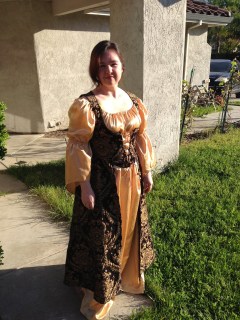
 
However, I do have this incredible gold satin Celtic chemise with a black and gold embroidered, lace-up over dress I got at a Scottish festival.  It is undoubtedly the most epic dress I own, and I figured if I couldn’t go green, at least I could go Celtic.

This is me not squinting.


So I hopped out of the shower and dug out my epic dress from the farthest reaches of my closet, behind the rest of the old dresses I don’t wear anymore.  I put on the golden layers, adjusted the silk chemise and laced myself up as tight as I could go.
 
My kids met me at the stairs wearing their martial arts’ uniforms, all ready for class, and I said, “Get your pads, it’s time for class!”
 
The funny thing is, they hardly batted an eye at what I was wearing.  It didn’t faze them in the least bit that I was wearing my Scottish garb to their martial arts class for the next hour and a half.  They just grabbed their bag of pads and got in the car, normal as always.
 
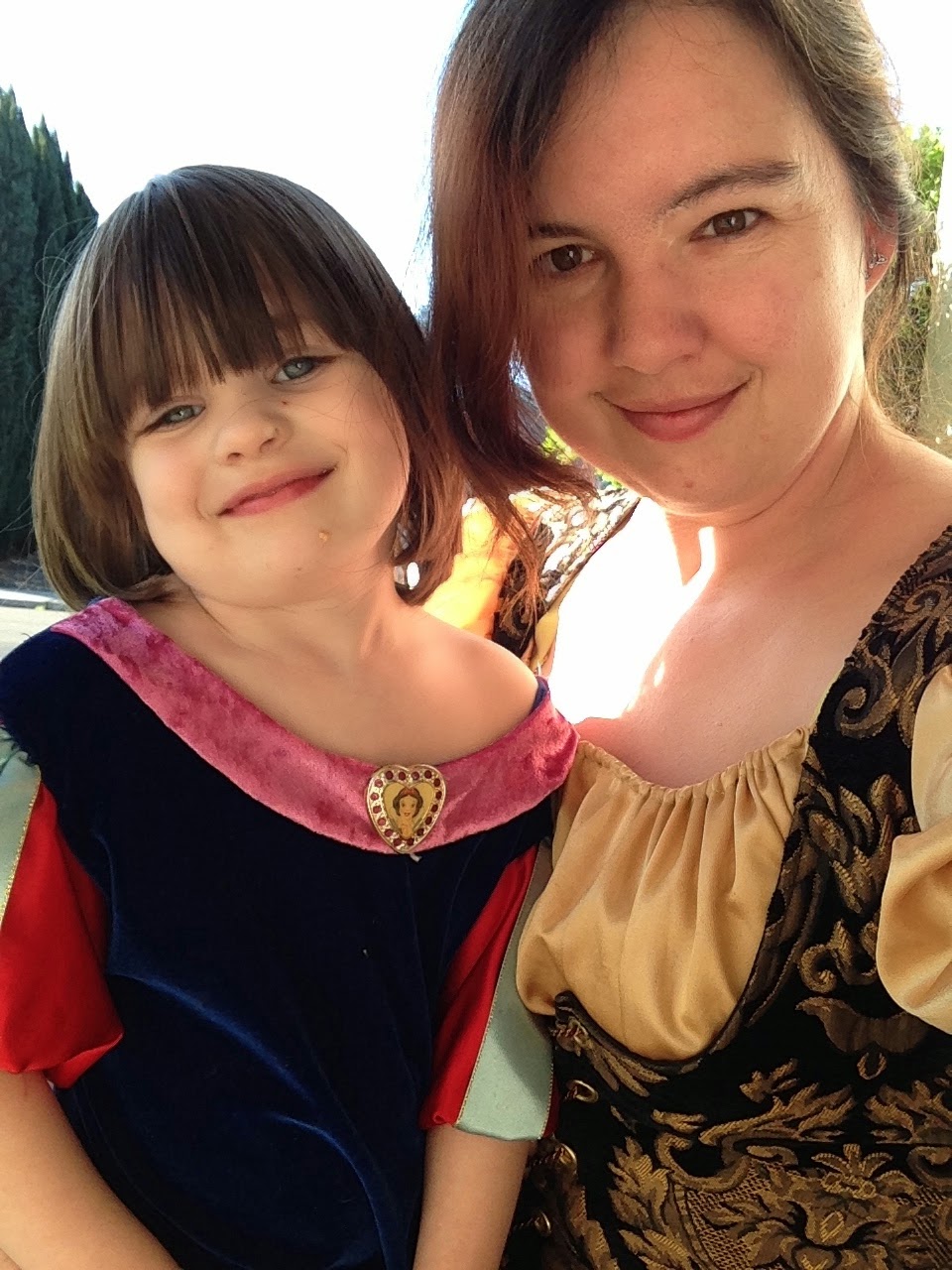
The only reaction I really got was from my 3 year old, actually.  She had just woken up from a nap and was coming down the stairs in her pajamas, and gasped in surprise when she saw me. All I heard when she turned around to go back into her room was her muttering, “It’s Princess Day, I have to get my Princess Dress…..
 
Those words were fantastic to hear.  It’s Princess Day.  I have to get my Princess Dress.
 
As a mother, and in particular as a homeschooling mother, it is crucial that I am a model for my kids.  They will be looking to my husband and me as models for what it means to be a woman, what it means to be a man, how a marriage works, what parents are like.  Since they are around me during the day, and every day for that matter, they will imitate how I behave, act and react to life.  
 
Ben took our oldest son out for hamburgers and pie for a “guys’ night out” the other night.  The funniest thing he reported back was after dinner our son  said to him, “Let’s take a walk to PetCo and look at the animals.  Mom would want us to get some good exercise.”  So they went over to PetCo and I got to hear about all the little critters they saw; which was super cute to listen to.
 
The truth is, you can overthink this aspect of being a model very quickly: “I am a model for my children, so no silly stuff.”
 
But that is the thing…the silly stuff is what makes the sun brighter, the flowers more colorful, the air that much sweeter.  The silly stuff makes the bubbles in summer fly farther, or the finger paint more vibrant.  It is the element that makes swimming in a lake together more memorable.  Or watching your favorite movie together and quoting all the words together, thus basically talking over the entire film.  The silly stuff adds that element of intense joy to life that you can’t buy, and you can’t fake.  It is genuine, it is personal, and it is loving.
 
Friends of mine have used words like “artsy” or “unique” to describe me before, which is totally valid.  They’ve used other words too, like “quirky,” or “creative.”  Truth be told, I have no problem wearing my favorite knee-high rainbow socks to church.  They’re my favorite socks!  I also have no hesitation painting my living room purple, or my kitchen lavender.  Although I live a pretty straight-forward, middle-class American suburban life…if I never did these little silly things that I love, I just wouldn’t be myself.  Anyone who knows me even a little bit would understand.  But more importantly, my kids know me and they understand.
 
I think it is important to the development of my kids’ characters to foster the love of learning, as well as the love of thinking outside the box.  Sure, you are supposed to wear green on St. Patrick’s Day…but what if you didn’t?  What else could you do?
 
And that is the question I pose for myself: If I am the role model for my kids, what else can I do?
 
It’s Princess Day, my friends.
 

Top 5 Pinterest Boards For Interesting Homeschoolers

I do love Pinterest.

Show me a woman who doesn’t like Pinterest, and I’ll just show you a woman who prefers Wanelo.  I’ve found that Pinterest is for people who need ideas, and Wanelo is for people who need to buy those ideas.  Ben showed me Wanelo once and I said, “Heck, I could make that.” To which he replied, “And that’s why you are on Pinterest.”

There are so many helpful boards I follow, I could hardly list them all.  I feel I am still just dabbling in my boards, and I have over 1,000 pins.  Truly professional pinners are in the +10,000 pin range, with +5,000 followers!  It’s just crazy.  I think I have around 130 followers, which is still a crazy idea to me, honestly.  I didn’t even have a quarter of that many people at my wedding (which was pre-Pinterest era…can you imagine??)


But there are always some boards that stand out more than others, so here are a few that I love!

1. Kids Play Arts Crafts: Preschoolers
http://www.pinterest.com/xPingu/kids-play-arts-crafts/
I love this board because I would do all these projects by myself, they are so much fun.

 
2. Carol’s Easy Learning Games
Carol Barnier is an amazing speaker, and a very interesting woman who has a million good ideas…look around! 
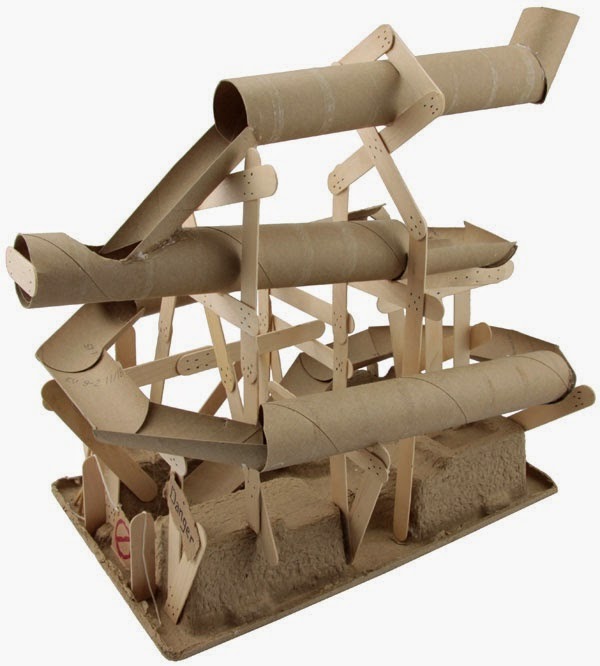
Homemade Marble Run
 
 
3. The Ultimate Homeschool Board
This is a great board with a ton of ideas, lapbooks, links and supplies for homeschoolers.  Highly recommended!
4. Homeschool Organization
You may know how to teach, but organizing a bazillion books, binders and projects may not be on your daily agenda, so to speak.  It might not even be on your radar.  But it’s important…and here is some help!
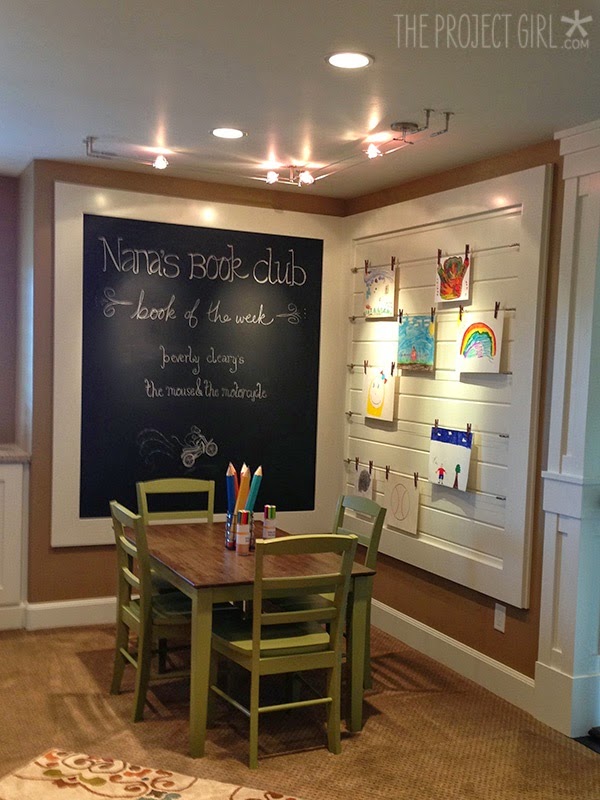
This is so disturbingly neat and orderly…
 
5. And finally…my Boards.  Because, why not?  Maybe you’ll find something on there you like!

Enjoy!

10 Ways To Rediscover The Kindness of Common Courtesy

jesus-children-09

Hugs are the best.


Just as any other city, there are a few homeless people who are regulars in my town. 

I have a budget for charity each month, and sometimes I buy them coffee if it’s cold out, or swing by McDonald’s for a warm meal if it’s late (it’s only $8 for a burger, fries and a large coffee…it’s not that much).  But I tend to always reach into the pocket of my backpack with the little cards that say “God loves you,” (because He does) with a dollar bill paperclipped onto it.  I figure it can get pretty lonely sitting on a corner asking for help.  Although I can’t do much for them all, maybe they need to hear that someone loves them once in a while.  Sometimes that alone is worth more than all the nickels and dimes they get.

But more importantly than any of this, I stop my car, look them in the eye and say to them, “Have a nice day.”  Sometimes I ask if there is anything else they need, like blankets or a jacket in the winter, but they have never taken me up on that (yet).

What kills me, if I’m going to be honest, is that every one of them replies with, “Thank you and God bless you.”

Every time.

I always drive away thinking how backwards this is, because they should be the ones simply replying, “Have a nice day,” and I should tell them, “Thank you for your humility, and God bless you in your endeavors.”

I have a home, a loving husband who provides for our large family, a meal to look forward to every day, and a stable future I can depend on.  The least I can do is extend common courtesy to the people around me.

Look them in the eye, smile and say thank you.

The other day I was at the store picking up a few things for dinner.  Spaghetti, tomatoes, french bread…just easy stuff for the night.

The cashier’s name was Amy P. and I looked her in the eye and smiled when she handed me the receipt and I said, “Thank you Amy.”

The woman bagging my spaghetti was Shannon, and I looked her in the eye, smiled and said, “Thank you Shannon, have a good day.”

These are common courtesy behaviors we are drilling into our kids.  Amy P. did not have to find my name on the receipt and say, “Have a good day Mrs. Rockwood,” and Shannon did not have to pack my bags in a way that made them easy to carry.  Yes, they were at work…but this is not some cold, dictatorship country where workers are forced to do things under penalty of death.  People still have the ability to choose their actions and behaviors, and we all know that there are some people who do not take their jobs with a cheerful heart, and they make the experience painful for everyone involved.(insert many colorful anecdotes here)

It is crucial, I think, to extend the same kindness to those who make the effort to extend kindness to you; or even more importantly, to those who don’t know how to do this at all.

Now, this is all small beans compared with giving clean water to underdeveloped countries, or feeding starving children.  But if we can’t be kinder and civilized in our own lives, how can we expect to be of any help to anyone else?

The only way we can change the world…for the better…is to start with ourselves.  Here are some ways to rediscover the kindness of common courtesy in our lives, so we don’t irritate people to the point of insanity!

1. Look them in the eye, smile and say thank you. Do this with your coworkers, your family, nurses, waiters, cashiers…heck, do it with yourself once in a while.

2. Use people’s names.  Real life isn’t the internet, and the people you see aren’t anonymous.  If you know their name or if they have a name badge, say their names.  “Thank you Tamarah” is a lot more personal and kind than “Thank you.”

3. Get off your phone if you are with someone.  I don’t think we need to be ridiculous about phones, but some common courtesy needs to be implemented.  I think talking on the phone in public is not a big deal, but if you are visiting someone’s house and you can’t stop texting someone else, I figure it’s fair game to drag you outside by your ear and kick you in the butt for being so rude.  If someone is giving you their time, do not disrespect them by ignoring them in their house. (obviously it is acceptable to “step outside for a moment” to take an important call, just don’t make a habit of it)

4. Instead of talking about you, ask them about them.  I figure we spend enough time with ourselves as it is, it is probably healthy for a person to find out more about someone else for a change.  It also encourages relationships to be formed, common interests to be found, and you can hear about how they feel or what they think.  This isn’t a “never talk about yourself, ever” tip, but a general courtesy to extend to others.

5. Think about how what you say may impact the people around you. For example, I was part of a mother’s group for a while and we had a birthday coming up so I invited the few other people in the group to the party.  Pretty straightforward stuff.  It’s completely understandable when people can’t make it: everyone has busy schedules, especially with kids.  It is completely a slap in the face when the person explains that her husband didn’t want to come to our house because he didn’t like us, and go on to spend the next 40 minutes talking about the amazing party they went to over the weekend and  name dropping the elders of the church who were there with them the entire time.  It was impressive how offensive this woman was, and how alienated people in that church felt because this kind of behavior was so accepted.  Learn from examples around you, especially if they are dumb examples.

6. Be on time.  This is incredibly difficult for us because we have 14 feet in this house that need shoes, and sometimes it is not as obvious where, exactly, each of these shoes are when it is time to leave.  But if you are expected to be somewhere at a given time and show up late, you are telling the other person/group that their time is not nearly as important as your time.  And there is nothing that irritates me more than having my time wasted, especially by people who are hours (yes, hours) late.  What’s the point?

7. Leave on time. This is a smaller infraction, but it is also just as important to give your hosts a break.  You don’t want to leave to early and have the hosts wonder if they said something wrong, but you also don’t want to stay forever so the hosts try to figure out how to nicely ask you to leave.

8. Dinner Manners Matter, Especially at Home. Dinner time isn’t a highly formal affair at our house, but it isn’t laissez faire either.  Pray together as a family, sit at the table together, talk to each other about their days, enjoy the meal together.  We have a routine where we go through everyone and ask what was the best thing of their day, what was the worst thing, and then what was their (make up topic) thing…like, what was their wettest thing, what was their smelliest thing, was was their bluest thing.  Just to keep it fun 🙂  But people are not allowed to wear costumes to the table, even though that’s a bummer sometimes.  You ask for something by saying, “May I please…” and you say “thank you” if you are given something.  You absolutely thank the person who cooked the meal.  These are all very small ways to make sure everyone has a voice in the family, everyone is respected and it extends loving relationships between people.  And for the love of all that’s good, no TV.  Music, yes.  TV, no.

9. Do not talk about your money matters with people.  Unless it is very close family or extremely close friends, this will only end in strife.  Don’t talk about how much debt you have unless you want to be judged for your debt.  Don’t talk about the endless surplus in your bank account unless you want the other person to feel belittled by your wealth.  This is a very sensitive subject for people, and it is best to use the highest courtesy with the matters of discussing money.

10. Everyone has joys in their lives to some degree, and everyone has struggles.  Be a pal and don’t disregard someone else’s situations in favor of your own.  This is an issue of comparison.  Be happy for them when they are happy, and be empathetic when they are suffering; but never, and I mean really never, reply with, “that is nothing compared to what we went through…”  In the end, people share their happiness and their pain in order to create bonds with each other.  Couples who have children will share the incredible highs and lows of parenting together.  Women who have suffered miscarriages will have a bond of pain together.  People who have suffered from illnesses will understand the struggles of regaining health again.  People in the same industry relate with each other, etc.

Laugh when your friends laugh, cry when they cry, and be stronger for them both in the end.

Here are some books for further reading:

Curious Culinary Crafting Does Not A Scrumptious Cupcake Create

Since I have the unique opportunity of cooking purely on a gluten free level, I have had many experiences along the way.

 I have had the occasion to experience culinary wonders I had never dreamed of when I could eat wheat flour.  Being forced to remove flour from my diet has made me look in areas I would never have glanced at before, which has been very exciting!

Let me tell you, the coconut macaroons from Bouchon Bakery in Napa are absolutely the most heavenly baked thing I have ever eaten in my life.  In my life.  They were so perfectly shaped, lightly crunchy and delicately sweet.  They were just heavenly.  I don’t have enough words to describe how wonderful they were, because they simply took the words out of my mouth and melted them in baked goodness.
 
 
BouchonBakery-logo2
But that is Bouchon
They are the best in the world, to put it lightly.  What about down home cooking?
 
What about potlucks?
 
potluck-clipart
Potlucks are fun to experience because it is a free environment where people love to share their family recipes and let other people experience the cultural culinary flavors of their homes.  It is a personal and relational experience that brings people together, especially in groups like Boy Scouts or Churches.  People can also tend to get experimental with foods, which is normally kind of fun to do. Watermelons in the shape of a turtle?  Always fun.  Baked hot dog and pineapple kabob for the kids?  Super fun!
But there will always be something with tiny little red flags poking out the back, and those dishes are typically the gluten free items.
 
The words, “it tastes normal, you’ll love it!” are false and empty promises, I’m sad to say.  We have all tried the muffin that is supposed to be light and fluffy, but is actually a replica of a meteorite that someone pocketed from the Air & Space Museum.  The gluten free bread that sucked all the moisture out of your mouth?  We’ve all had that.  Or worse, the cheesecake made out of only whipped cashews (I’m not sure how it’s still a cheesecake…) that killed your last hope that gluten free desserts were palatable at all.
 
My advice is that if you are going to share gluten free items with your friends, make them memorable…in a good way!  If your friends’ reaction is, “are you sure this is gluten free??” or “I can’t believe this is actually gluten free, it tastes amazing!” then you are doing it right.  Both to the recipe and to your friends.
 
However, serving a “cupcake” that is made of gelatin, coconut oil, coconut milk and stevia is just wrong.  If you are suspending oil in a gelatin, I see that more as mayonnaise than as a cupcake; and it felt about the same when I held it in my hand, to boot.
Friends! Make gluten free baking a thing to be praised!  Use real recipes!  Do not experiment on your friends!
 
Here are some great gluten free recipes and cookbooks I love:


The Platypus: The Dueling Nature

The duality of the Platypus is a slow battle of wills, in a constant battle within the soul with one conformist side attempting to fit in with the surroundings (and mostly succeeding) and the opposing non-conformist side, very simply put, not feeling like they fit in.  It is this side that has so long been undefined, which I simply am tired of wrestling with.

female wrestling


With a stunning dash of hubris, just as Adam had the dominion to name the beasts, I have taken dominion over this non-conformist side which has historically been such a thorn in my suburban side and have named the beast: The Platypus.

The Platypus side of me is creative, independent, strong and different…although, it is difficult to exactly pinpoint “why” it is different, considering how different people are in general.

I, though, have the unique experience of being a woman.

Wonder-woman


Granted, there are a few billion other people in this world who have the same experience, in different ways; but I am particularly intrigued by my story (primarily because I get to live it…call it an existential eccentricity).


My name is Tamarah.  I have been told by my mother that I was about to be named “Sunshine” (thanks 60s-hippy movement!), but she found this name and liked it better.  I have always liked my name, mostly because it sounds euphonic, but also my father said it was a combination of “Tamar” and “Sarah.” 
medusa1
Right side, Whole face, Left side

In the end, I believe this duplicity has reflected me the best because there has seemed to be an epic battle of personalities within me that just never balanced well; or I have not had the courage to balance them.  The personality of conformity that insists on having an orderly domestic life, raising kids, planting an aspirational garden, having chickens in the backyard, canning seasonal jams and the like.   The nonconformist within me that bucks the system and homeschools her kids, hates premade food so cooks everything from scratch, is angry with the government and has voted in every election, devoted to good causes, hungers for justice, et al.  This side which marginalizes my personality in groups, forcing me to analyze myself, my surroundings, my focus and my purpose.  This side which, frankly, exhausts me with its persistent movement within me.
The Platypus is a damned curious creature which has confounded scientists for ages.  When they were first discovered, the world rejected the concept of this animal due to the obviously conflicting natures it possessed.  A mammal with a duck bill?  Webbed feet, and yet with mammary glands?  Solitary by nature, yet social enough to procreate?  What an odd animal, to say the least.The Platypus woman is likewise such a conflict within Western culture: most likely she enjoys traveling, never comfortable with unprogressive complacency.  Never comfortable with ubiquitous routine.  Enjoys being in a group, for for heaven’s sake…in doses.  Not entirely an introvert, not entirely an extrovert, but definitely an observer of society.This observant quality is what establishes the strength of leadership within the Platypus, more than anything.


And, I think, the primary difference in Platypuses is our strength.  It is our determination to sincerely discover ourselves within a culture of conformity; our courage to overcome tragedy; our spunk, our vigor,our vulnerability, our bravery…

It is our strength in life which makes us a Platypus.  

Strength-Symbol


So, my purpose for The Platypus Directive is to begin the road to Oz, so to speak, to explore the habitats of Platypuses, the unique dietary requirements and idiosyncracies of Platypuses…

But most of all, to discover how Platypuses got to where they are, and to connect us to each other.

Because when you are a Platypus, you know exactly what this means.  And now we have a name through which to understand this undomesticated side of us.


Welcome.

The Platypus Theory: Backstory

“I realized that I needed to put a name to this group of women, and finally give us something to work with.   This is my Platypus Theory. This blog catalogs the Platypus Directive.”


I have always been an observer.  I get much more pleasure out of watching a crowd of people than I do interacting with them.  

 
       There are so many things people bring with them that it is like watching stories unfold every time they go outside; and, granted, some stories are better than others.  A floral shirt a woman wears that reminds her of her Portuguese grandmother back home; jeans that are worn in the knees from years of carpentry, following in the footsteps of his father; a young woman with a crisp new leather purse she bought with her first paycheck.  Which brand of cigarettes does this man smoke, which shade of lipstick does that woman wear, what are they listening to, what are they saying?  I love to see what people are drinking, which tea they prefer, what they put in their coffee: what does it all mean?
       With all this in mind, it is no wonder I have spent most of my time in mother’s groups and women’s groups observing my neighbors at breakfast potlucks.   There were outgoing women, shy women, women who spoke in German as a secret code to combat feeling uncomfortable; women who cooked, women who hated cooking, women who could decorate their homes that would put J.Crew to shame, and eclectic women who just did whatever they felt like.  It kept me entertained, at least.
       I loved watching the spectrum of people involved and the amount of different things they all brought with them.  Yet, there was one day at a mother’s group when I saw something different:

The Ice Breaker

 
       We were playing an “ice breaker” game, which I’m sure everyone has played at some point in a group setting.  “An icebreaker is a facilitation exercise intended to help a group to begin the process of forming themselves into a team. Icebreakers are commonly presented as a game to “warm up” the group by helping the members to get to know each other. They often focus on sharing personal information such as names, hobbies, etc.”(1)  Which is just the clinical definition for, “we are forcing you all to interact with each other. For fun.”
       The game we were playing was a “four corners” game, where a question is posted on the screen and 4 possible answers were displayed as “A,B,C,” or “D.”  We were to go to the labeled corners of the room in relation to our answer: so if we answered B, we would go to the corner of the room marked B.  It is pretty straightforward, and fun to play since we get to see what we have in common, or what differences we had with each other.   
       The question I remember in particular was something along the lines of, “When you feed your family, you would prefer to: a) eat out, b) order in, c)frozen or boxed meals, or d) make dinner from scratch.”  I made my way to the D corner, because I prefer to explore my creativity through culinary arts in my kitchen just about every day and every night.  Since I was diagnosed with Celiac many moons ago, I found it was just easier to make meals from scratch to eliminate the surprise ingredient I was wont to find in premade dishes; so, I cook at dinner every night, from scratch, trying out new things to keep it hopping.  I have so much fun in this area, I naturally thought everyone else did too!  Why wouldn’t they??
 
       What happened when I went to the D corner was interesting: I anticipated the majority of women to be in this corner with me, when instead I was standing there with 4 other women, out of about 80 women total.  I was astonished that more people weren’t like me…which, I know, is a big shocker to anyone!
 
       After that, though, I started noticing that there were always about 5 women in a large group who never really fit in.  For some reason, they were the observers of the community, watching everyone else interact.  Every group, the same situation: I was watching them watch others.
    
       Yet, I could see no obvious, valid reasons for this to happen: for example, in one mother’s group I was in, it was a pretty homogenous group.  We all lived in a Californian suburb, we all had a similar housing arrangement (e.g., we all had a house, as opposed to some of us living in apartments, condos or trailers), we were all in the same general financial spectrum (a solid middle-middle class), we all had children about the same ages, we all shopped at Target, we all drove similar cars, and we all were following the same religion.  With all of this, you would really think that every one of us would have been 100% accepted!
 
       And yet…there were about 5 of us who weren’t.  

Master of Operations Management: MOM

 
       Anyway, I just kept that in the back of my mind, just chewing it over for a year or two.
       About this time I also had my “pregnancy marathon” years: 3 kids in 3 years, with 2 already out of their toddler years and I had just started homeschooling our oldest.  We were busy, to say the least!  We found ourselves in different social circles a few times, from switching churches or finding different homeschooling groups,  and I kept noticing this same pattern: a couple women in these groups never felt comfortable belonging.  It was interesting.
 
       Also about this time, on another note, I was writing, publishing my first book, sewing, gardening, homeschooling, educating myself on elementary school academia, running a mother’s group and scheduling childcare and speakers for the group, raising kids, raising babies, being married to the most amazing man, and trying to keep up with the laundry (this is still a work in progress).  
 
       I was sitting at my desk one day lamenting the fact that I didn’t like my title.  “Mom.”  What is that?  It covers so little of what I do every day, that I wasn’t satisfied with my title. When people asked what I did for a living, replaying with “Mom” just didn’t cut it.  I also didn’t feel comfortable listing all the things I do, because then it just sounds like I’m defending myself or compensating for something, and that’s not the case.  However, I wanted to give myself credit for what I did do.  
 

         I decided that I needed to take my fate into my own hands and give myself a title that was better suited to cover all of my qualities. 


       Be the master of my own destiny and create a title that fit me.  My husband and I worked on many different titles for a few months, and finally settled on “Master of Operations Management.”  I was very pleased with this title.

 
       But then I was thinking about the unnamed group of women I seem to find in every group.  They aren’t all extroverts, they aren’t all introverts; they aren’t all engineers or domestic divas; they were each individually different, and yet had the same unique quality I could see as clear as day whenever we got together with them.  They were the small, unnamed group of women in offices, in churches, in groups and in families who are different…for some reason.  There is a duality about them that allows them to belong to a group, without becoming a part of the group.  
 

       I realized that I needed to put a name to this group of women, and finally give us something to work with.


 This is my Platypus Theory.        

This blog catalogs the Platypus Directive.