Because You’ve Been Pining For It – “Tenant of Wildfell Hall”: Chapters 2-5

Monday No-Obligation Book Club Study Questions!

W007!

benedict-cumberbatch-promise

Listen, Benedict loves my study questions.  He told me so himself.

Chapter 2: Autumn- a time to plant your winter garden

1) the chapter begins in the fall, which is the best time to begin your winter garden, or to plant
trees. How is this significant to the story, or to the relationship between Gilbert and Mrs.
Graham?
2) Why do you think the men went hunting, as opposed to showing the men at work, at the
pub, etc.?
3) Why is the name and history of “Wildfell” important?
4) How does the description of Wildfell reflect on Mrs.Graham?
5) The opening of gardens and closing of iron gates with her first conversation with Gilbert:
how is this reflective of Mrs.Graham?

Chapter 3: Setting Boundaries

1) mrs. Mark ham and mrs. Graham really get into it in the beginning of this chapter. mrs. Mark
ham states her position as,” But my dear, I call that doting. You should try to suppress such
foolish fondness, as well to save your so from ruin as yourself from ridicule…” “…he should
learn to be ashamed of it (apron strings)Why do you think she feels this way? How does it
reflect the nature of the small, rural community in which she is raising her children?
2) How is mrs. Graham setting boundaries around her home, and her son, in particular? After
her stance on wine is exposed, what do you think is her motive for her boundaries?
3) Old views of parenting vs. new views of parenting?
4) Mrs graham has distinct views on virtuous ness. “Girls are prone to sin, while the nobler sex
there is a natural tendency to goodness, superior fortitude, further developed” “I would not
send a girl unarmed into the world, ignorant of the snares; nor will I guard her, till deprived of
self-respect and self-reliance, she lost the power or the will…” Where do you think she
came up with these ideas? Do you think she is trying to form a cultural rebellion, or is it for
self-preservation?
5) Gilbert admits in the end that, “perhaps I was a little spoiled by my mother and sister.” Why
do you think the author included this?

Chapter 4: Study of Persons

1) The party begins on November 5th. This is a pretty significant date for Britain. Why did the
author plant this date in the story?
2) The party politics were interesting, but familiar. Why is it interesting that the persons at this
party are the same type of persons who we find at parties now, as well?
3) Piano: “there was plenty of skill, but precious little feeling.” Why is it interesting that this
would be important to Gilbert to notice?
4) Why do you think Eliza’s father wanted a moderation of dancing?
5) “As artful a little hussy as anybody need wish to see.” Gilbert’s mother doesn’t like Eliza.
Why not? Do you think this is contradictory to what she claims to espouse as well tempered
people?
6) How does Gilbert respond to his mothers opinions of Eliza?

Chapter 5: Mrs. Graham, exposed

1) Rose and Gilbert visit Wildfell Hall, and first see an easel. Why is this interesting?
2) What is the significance of Fernley Manor?
3) She admits she is under cover. What does this mean?
4) Who do you think the man is who arrived “suddenly”?
5) Who do you think the portrait of the winking man is?) Is it significant that she apologizes? Why?
7) “When a lady condescends to apologize, there is no keeping ones anger.” How is this
important to Gilbert’s relationship with mrs. Graham?

Do Not Poke The Bear

push-button

.
A phrase of warning used to prevent oneself or others from asking or doing something that might provoke a negative response from someone or something else.
 
Employee 1: “Should I ask the boss for a day off?”
Employee 2: “He just found out his wife left him, so don’t poke the bear.”
 
Or, maybe another way of putting it:
 
Church member1: “I know we have been sitting here with a flock of toddlers for 4 hours, but do you think it is a good idea to spend another hour asking vacuous questions, again, for the millionth time, to make sure people are paying attention to me?”
Church member 2: “No, that is a terrible idea.  The bear over there has already had it with a litany of things this morning, such as saying that certain mental illnesses don’t even exist, and if you even so much as breathe on the bear, it might destroy you.  You might want to save this for after service, with respect for the families with little kids!”
 
What would have been optimal is if the response was this:
Church member 1: “Oh, that is a much better idea.  Thanks for the tip!”
 
Unfortunately, it was not.  And I am doing clean up crew for the mess I made.  
 
Anger and wrath enter the lives of every one of us. But let us learn from Jesus to be “swift to hear, slow to speak, and slow to wrath” (James 1:19). Let us also learn that there is a time for righteous indignation. When there are those who stand between God and the true worship that is due Him—whether it be through false doctrine, hypocrisy, or any other vice—let us remember the example of the Lord and “be angry, yet sin not” (Ephesians 4:26).”
 
So, apparently I have reached the boundaries of my patience, and lost it in church yesterday.  Lost. It.  I remember in the film, “Patton,” Gen. George Patton was looking over the grave of a soldier he had just buried and wrote a letter to the soldier’s family.  It was absolutely beautiful, and gets me every time I hear it.  He said something along the lines of, “He was a good man, and had no vice.”  
 
I would love for that to be said of me when I am remembered.  Unfortunately, it isn’t a realistic goal.
 
I certainly don’t have huge, glaring vices like drugs or gambling.  But the vices of hatred and pride are certainly ones I struggle with.  I hate men who are abusive to women.  Even a little bit.  Easy enough, right?  What if no one else has a problem with it?  Hmm. I hate men who make younger women feel very sexually uncomfortable.  Probably something to be angry about, as well.  But he’s “just *name*.”  Okay.  I hate hypocrisy…even though I am a hypocrite and I hate that in myself as well.  Anyone who says they aren’t a hypocrite is naive and blind.  It’s as clear as that.  But some days hypocrisy is tough to listen to.  For hours.  And hours.
 
And don’t even get me started on false teachers in the church.  I’m already in a world of trouble as it is.
 
My prayers, my earnest prayers, for myself are, once again: humility.  Maybe even meekness, if I really want to stretch myself.
 
So, that’s where I am, people.  One giant, cuddly, flawed bear.


“Poetry. Beauty. Romance. Love. These are what we stay alive for.”

tumblr_na68gzqVE11qjepkzo1_500


Last night I went to see “Guardians of the Galaxy,” and got caught up in the whole first 5 minutes of the film.

If you haven’t seen it, his mom dies.  You’re welcome.

Anyway, as I was watching the scene, I realized that my perspective has certainly changed over the years.  I think I was supposed to be identifying with Peter Quill in that moment: trying to figure out what was going on, angry that my mom was dying, isolated from humanity through the unbearable grief of death…

But in that moment all I could think of was the things I would want to tell Peter as his mother.

“Peter, this is going to be tough, and I can’t be here to help you anymore, so listen to me sweetie.  Death is painful…for you.  I won’t be in anymore pain after I die, but you will. You will have this pain like a rock inside of you that you can’t move.  You will feel like you can’t breathe with this rock sitting in your chest.  I want you to take some time to feel the rock, so you know what it is, and so you can let it go.  Take time to write all your questions to God on the rock.  Go ahead and ask Him why this had to happen: it’s okay to ask.  Write down all the betrayal you feel, every tear of grief and lay it on top of the rock.  And when you are ready, go down to the ocean and put the rock on the shore with the rest of the rocks.  Let the waves come and go over your toes.  And you can remember me there.  But when you turn around to return home, I want you to be the best man you can be.  Be kind to those who hurt.  Be loving to those who are angry.  Be forgiving to the bitter.  Because you understand what it feels like, and you know how much pain we all are in.  And you can be their smile when they forgot how to smile.

Peter, life isn’t always going to be fair, and I am sorry for that.  But you will never regret being too kind or too loving.  Make sure you see the people around you who you can love, and make sure you let them love you back.

Love,

Mom”

Death is so final.

Most of my family has died.  There is nothing I can do to bring anyone back.  And I spent a lot of time sitting at the desk, so to speak, staring out the windows trying to find answers to the “whys” of death.

But after I became a mother, my perspective has definitely changed.

I looked down at the people sitting in the desks staring hopelessly out the window, and I at want to find the words to make sense of things.  At least the best as humanly possible in the face of ethereal pickles.

The death of both Phillip Seymour Hoffman and Robin Williams are tough.

Both of them brought so much beauty and joy through their art, it is agonizing to think that there is nothing we can do to bring them back.  I can’t write them a letter and tell them that millions of people love them.  I can’t reassure them that sometimes life hurts, but if they need to talk to someone, someone will always be there.

I can’t tell them these things, but I can tell the people around me…I can love them, and help them with their rocks that are keeping them at their desks.

And maybe, if I extend my hand to them, maybe I can help them stand on the desk too.

You never know.


Easy Saturday Science Project: Walking Water

I saw this on Pinterest, and it was just a quick science project we could have going during the day, so we gave it a shot!

Walking Water!

It’s pretty (ridiculously) easy:  You need 3 cups, 2 paper towels and some food coloring.  The goal is to watch the water “walk” up the paper towels and transfer into the middle cup.

caveat: This projects takes forever.  For. Ev. Er.  So, it’s not only a lesson in physics, but also one in patience.

1) Take the cups and put them next to each other.  Put a few drops of food coloring in the outside cups and stir in some water.  We did yellow and blue so we could make green!

IMG_8009

2) This is after about half an hour.  It’s fun to watch the water walking across the paper towels.  You’ll find yourself saying things like: “I’m so glad this is working.”

IMG_8010

3) This is after about 2 hours.  It takes a while.

IMG_8011

4) This is after 3 hours…we are finally starting to get some green in the middle!

IMG_8012

5) This is after a couple hours…maybe 5.  I stopped checking exactly a few hours ago. I’m just glad we’re getting a puddle in the middle cup at this point.

IMG_8015

6) I took this picture before I went to bed at 11pm, so it has been about 12 hours by now.

IMG_8016

7) This is when I woke up…I think this is all we’re going to get.  The blue transferred itself over more than the yellow for some reason, but we have a nice emerald green in the middle!  IMG_8017


Anyway, this is a fun project to do with the kids  🙂  Here are some lesson sheets on diffusion vs. osmosis if you want to ramp it up!

Osmosis png  for blog

(link)


osmosis-and-diffusion-venn-diagram(link)


Why Lauren Bacall Is My Girl

Bacall-lauren-bacall-31059196-900-1131

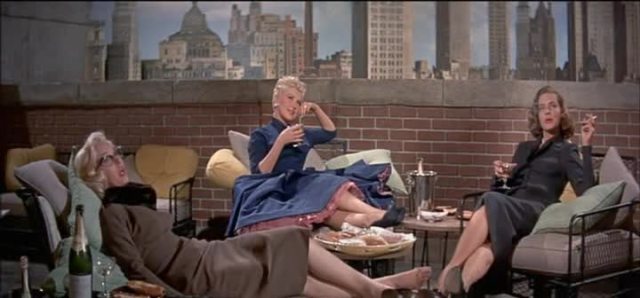
The first time I saw Lauren Bacall was in “How To Marry A Millionaire,” which my Dad had given to me on VHS.

The movie had 3 knockout women playing the leads: Betty Grable, Marilyn and Lauren Bacall.

I knew Betty Grable, thanks to a “Going Steady With Betty” marathon sometime in the 90s.  She’s super sweet, and you can’t  not love Betty.   And, of course, Marilyn.  Marilyn is Marilyn…you don’t need many words for her.

How-to-Marry-a-Millionaire-Marilyn-Monroe-Betty-Grable-Lauren-Bacall

But this other woman I didn’t know just stole the movie and made it her own.  She had this husky voice I think she stole from a woodland nymph in the depths of German  Black Forests, piercing blue eyes that could peel the flannel off a lumberjack, and a confidence I’m sure Gen. Patton would have shrank from….I loved it.

969ad009588252a95bef321e223831f0(credit)

 But when I looked into her biography, I loved her even more.

On September 16, 1924, Lauren Bacall, the only daughter of Jewish immigrants, William Perske (a relative of former Israeli Prime Minister Shimon Peres) and Natalie Weinstein-Bacal was born in New York City. She was christened Betty Joan Perske. Even until today, her close friends still address her as Betty.

They were a middle class family with her father working as a salesman and her mother as a secretary. For the first five years, Betty lived in Brooklyn with both parents, but her world changed when her parents divorced. Her father got into his car and left the house for good.” (laurenbacall.com)

She didn’t give a rats behind what anyone thought about her.  When she married Bogart, she stopped working as often so she could stay home and raise their kids.  Bogart said they didn’t even talk about it at the time: they were both “old fashioned people” and they walked in step with each other throughout their marriage.

“I put my career in second place throughout both my marriages and it suffered. I don’t regret it. You make choices. If you want a good marriage, you must pay attention to that. If you want to be independent, go ahead. You can’t have it all.”  -Lauren Bacall

During her marriage to Bogart, Lauren Bacall starred in only one film per year. The pair co-starred in three more films (The Big Sleep, Dark Passage, and Key Largo), and had two children together, Stephen and Leslie. In 1957, Bogart died of lung cancer. Bacall was devastated. After a brief and disastrous fling with Frank Sinatra, including a very brief engagement, Bacall went east to return to her very first love, the theatre. “I finally felt that I came into my own when I went on the stage,” she says.” (biography.com)

I just love that she was always pursuing “coming into her own” during her life.  This meant marrying a guy 25 years older than she, because it was the right thing for her, or even that it might have stunted her career because she was now “Bogie’s wife” to the studios.

Bacall was a force.  A force of woman.  A woman who had a career, a marriage, children and an identity of her own.  How can you not love and admire all of this.

Before long, Bacall again placed her focus on her personal life. She married again in 1961, this time to Jason Robards, Jr. The couple soon had a son named Sam. During her second marriage, Bacall starred in relatively few films. Bacall and Robards were divorced in 1969, and, shortly after, Lauren Bacall was approached to play the lead role in a new Broadway musical, Applause, which was based on the 1952 film All About Eve. Despite not being a singer, Bacall accepted the role. She was a great success, and earned a Tony for Best Actress. She won her second Tony in 1981 for a semi-autobiographical role in the play Woman of the Year.(biography.com)

What gets me the most about Bacall is her opinions.  Because a lady has two things: good shoes, and radical opinions:

She told Vanity Fair that “I don’t think anybody that has a brain can really be happy. What is there really to be happy about? I had a good growing-up life, I would say, but I wasn’t really happy, because I was an only child, and I wasn’t part of a whole family—what we in America consider the proper family, a father and a mother and child, which, of course, is a big crock, we know—and yet I had the greatest family anyone could wish for in everyone on my mother’s side. So what you think is happy? Happy shmappy.”” (biography.com)

She just cracks me up.

I like a woman who knows herself.

lauren_bacall

(credit)

Tennant of Wildfell Hall: Chapter 1

1. The story starts very firmly in the summer of 1827.  What are some things that were happening in Britain in 1827?  How was the social landscape, at the time?

2. Why did the story start out with “My father”?

3. The narrator spent a good, long paragraph in the beginning telling the reader what his father wanted him to do in life.  How do you think this might set the tone for the rest of the book?

4. It is interesting that the narrator would then spend the rest of the chapter describing his sister, and what she looked like, and his mother, and what she was doing.  It seems to me that the female perspective of the author overcomes the male perspective of the narrator in this sense.  What do you think?

5. After the mother spoke with Mrs. Graham, she said Mrs. Graham “betrayed a lamentable ignorance on certain points, and had not even the sense to be ashamed of it…On household matters, and all the little niceties of cookery, and such things, that every lady ought to be familiar with.”  What do you think about this?

6. In the church, the “old family pew” of Wildfell Hall had “faded crimson cushions and lining which had been unpressed and unrenewed so many years, and the grim escutcheons, with their lugubrious borders of rusty black cloth, frowned so sternly from the wall above.”  How does this description set the tone for Mrs. Grahams entrance into the story?

7. The narrator spent a good amount of time describing the rest of the characters after church.  Why would he do this?